Food & Drink That Damage Your Teeth: What to Avoid for a Healthy Smile
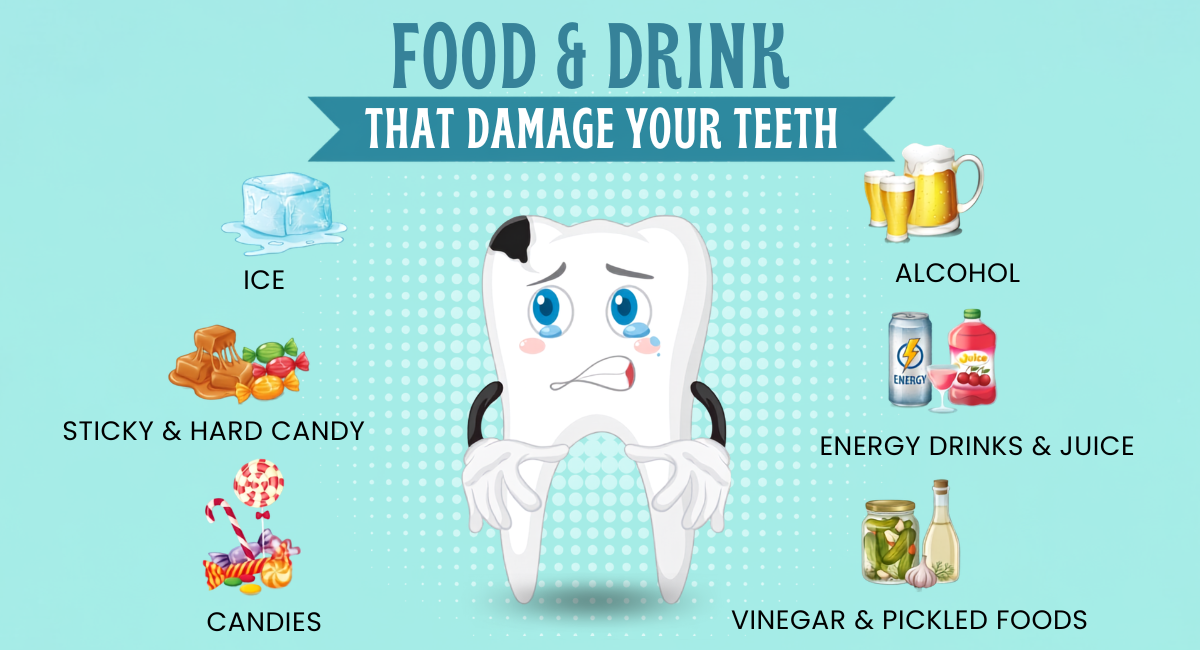
Your teeth are designed to handle everyday eating and drinking, but some foods and beverages can increase the risk of tooth decay, enamel erosion, tooth sensitivity, staining and dental damage. What you eat matters, but how frequently your teeth are exposed to sugar, acids and other harmful habits also plays an important role in oral health.
Many foods and drinks that seem harmless can become problematic when consumed frequently or in large amounts. Sticky candies, sugary drinks, acidic foods, alcohol and even chewing ice can put unnecessary stress on your teeth.
Understanding which foods and drinks can damage your teeth can help you make smarter choices and protect your smile.
Here are some common foods and drinks to be careful with and practical ways to enjoy a healthier diet.
1. Sticky and Hard Candy
Sticky and hard candies are among the foods that can be particularly harmful to teeth.
Sticky sweets can remain attached to tooth surfaces for a long time. This gives the sugars more opportunity to interact with bacteria in dental plaque and contribute to tooth decay.
Hard candies can also be problematic because they dissolve slowly, resulting in prolonged exposure to sugar. Biting down on hard candy can additionally put excessive pressure on teeth and may contribute to chipped or cracked teeth, especially if a tooth is already weakened.
Examples include:
- Toffees
- Caramels
- Hard boiled sweets
- Taffy
- Gummy candies
- Sticky confectionery
If you choose to eat sweets, consider having them with a meal rather than frequently snacking on them throughout the day. Drinking water afterward can also help rinse away some food residue.
2. Candies and Sugary Sweets
Candy contains significant amounts of sugar, and frequent consumption can increase the risk of cavities.
When bacteria in dental plaque use sugars from food and drinks, they produce acids. These acids can gradually weaken tooth enamel and contribute to tooth decay.
Common examples include:
- Lollipops
- Gummies
- Chocolate candies
- Toffees
- Sugar-coated sweets
- Candy bars
You do not necessarily have to eliminate every sweet treat from your diet. The more important goal is to avoid frequent exposure to sugar.
Try to keep sugary foods to mealtimes rather than allowing children or adults to snack on sweets repeatedly throughout the day.
3. Sugary Soft Drinks
Soft drinks can be harmful to teeth because many contain both sugar and acids.
Sugar can contribute to tooth decay, while acidic ingredients can contribute to enamel erosion. Regular consumption may therefore increase the risk of both cavities and enamel damage.
Examples include:
- Cola
- Sweetened carbonated drinks
- Flavoured soft drinks
- Sweetened fizzy drinks
Instead of regularly drinking sugary soft drinks, choose water as your primary beverage.
If you do consume an acidic or sugary drink, avoid slowly sipping it over an extended period because prolonged exposure keeps your teeth in contact with sugars and acids for longer.
4. Energy Drinks
Energy drinks deserve particular attention because they may contain significant amounts of sugar and are often acidic.
Frequent consumption can expose teeth to both sugar and acids, potentially increasing the risk of tooth decay and enamel erosion.
Energy drinks may also be consumed slowly during sports, work or study, extending the duration of exposure.
Water is generally a better everyday choice for hydration.
If you regularly consume energy drinks and notice tooth sensitivity or other dental concerns, discuss them with your dentist.
5. Fruit Juice
Fruit juice may seem healthier than soft drinks, but some juices can still contain considerable amounts of naturally occurring or added sugar and may be acidic.
Frequent exposure to acidic drinks can contribute to enamel erosion, while sugars can contribute to tooth decay.
This does not mean you must completely avoid fruit. Whole fruits generally provide fiber and require chewing, making them different from fruit juice.
For everyday hydration, water is a simple choice.
When drinking juice, consider having it with a meal rather than continuously sipping it throughout the day.
6. Alcoholic Drinks
Alcohol can affect oral health in several ways.
Some alcoholic drinks contain sugar and acids, while alcohol itself can contribute to dry mouth. Saliva plays an important protective role by helping wash away food particles and neutralize acids in the mouth.
Reduced saliva can therefore make the mouth more vulnerable to dental problems.
Some alcoholic beverages may also contribute to tooth staining, particularly when consumed regularly.
If you drink alcohol, moderation is important. Drink water alongside alcoholic beverages and maintain a consistent oral hygiene routine.
If you have specific medical or dental concerns, consult an appropriate healthcare professional.
7. Vinegar and Pickled Foods
Vinegar is acidic, and frequent exposure to acidic foods may contribute to enamel erosion over time.
Pickled foods prepared with vinegar can therefore be worth considering as part of your overall diet, especially if you consume them very frequently.
You do not need to completely remove vinegar or pickled foods from a balanced diet. Instead, avoid unnecessary prolonged contact with acidic foods and maintain good oral hygiene.
After consuming acidic foods, rinsing your mouth with water can help clear some of the acids.
Importantly, avoid brushing your teeth immediately after a highly acidic meal or drink. Acid can temporarily soften the enamel surface, and brushing straight away may increase mechanical wear. Waiting before brushing can help protect the enamel.
8. Ice: Don’t Chew It
Ice itself does not contain sugar and is not harmful to teeth simply because it is cold. However, chewing hard ice cubes can be damaging.
The pressure from biting hard ice can potentially cause:
- Cracks
- Chips
- Tooth fractures
- Damage to dental fillings or restorations
This is particularly concerning if you already have weakened teeth, large fillings, crowns or other dental restorations.
If you enjoy cold drinks, allow the ice to melt instead of chewing it.
If you regularly feel the urge to chew ice, discuss the habit with your healthcare professional because persistent ice chewing can sometimes be associated with nutritional issues.
9. Dried and Sticky Foods
Some dried fruits and sticky snacks can cling to teeth.
Although foods such as dried fruit may provide nutrients, their sticky texture can leave sugars on tooth surfaces for longer periods.
Examples include:
- Raisins
- Dried mango
- Dried dates
- Fruit snacks
- Sticky cereal bars
If you eat these foods, consider having them as part of a meal rather than repeatedly snacking on them. Maintaining good brushing and interdental cleaning habits is also important.
10. Frequent Snacking Can Harm Your Teeth
It is not only the type of food that matters. How often you eat and drink throughout the day also matters.
Every time you consume sugary or acidic foods and drinks, your mouth experiences changes that can affect your teeth.
Frequent snacking can therefore give your teeth less time between exposures.
Instead of constantly eating sugary snacks, try to:
- Keep regular meal times
- Choose tooth-friendly snacks
- Drink water between meals
- Limit sugary drinks
- Avoid continuously sipping sweetened beverages
A balanced eating pattern can be beneficial for both oral and general health.
What Should You Eat and Drink for Healthy Teeth?
Protecting your teeth does not mean avoiding everything you enjoy. A balanced diet can include a wide range of nutritious foods.
Some tooth-friendly choices include:
- Water
- Fresh vegetables
- Whole fruits
- Plain dairy products where appropriate
- Cheese
- Whole grains
- Protein-rich foods
- Nuts where appropriate and safe
Water is particularly useful because it helps keep the mouth hydrated and can help wash away food particles.
A balanced diet provides nutrients needed to support healthy teeth, gums and the rest of your body.
How to Protect Your Teeth After Eating
Good habits after meals can help reduce the impact of potentially harmful foods and drinks.
Drink Water
Rinse your mouth with water after consuming sugary or acidic foods and beverages.
Don’t Brush Immediately After Acidic Foods
After acidic foods or drinks, wait before brushing rather than brushing immediately.
Maintain Your Brushing Routine
Brush twice daily with fluoride toothpaste and clean between your teeth regularly.
Limit Frequent Sugary Snacks
Try to keep sugary foods and drinks to mealtimes rather than consuming them repeatedly throughout the day.
Visit Your Dentist Regularly
Professional dental examinations can help detect cavities, enamel wear and other oral health problems early.
Signs That Your Teeth May Need Attention
You should speak with your dentist if you experience:
- Persistent tooth sensitivity
- Toothache
- Pain when eating or drinking
- Chipped or cracked teeth
- Increased sensitivity to cold
- Visible enamel changes
- Tooth discoloration
- Bleeding or swollen gums
- Persistent bad breath
Early evaluation can help determine the cause and prevent a minor problem from becoming more serious.
Conclusion
A healthy smile is influenced by both what you eat and how often your teeth are exposed to sugar and acids.
Sticky and hard candies, sugary drinks, energy drinks, frequent fruit juice, alcohol, acidic vinegar-based foods and chewing hard ice can all present different risks to your teeth. You don’t necessarily have to eliminate every food or drink from your diet, but moderation and good oral hygiene are important.
Choose water more often, limit frequent sugary snacks, avoid chewing ice, maintain good brushing and interdental cleaning habits, and visit your dentist regularly.
Small changes in your everyday diet can make a big difference in protecting your teeth and maintaining a healthy smile.
Protect Your Smile With Professional Dental Care
If you are experiencing tooth sensitivity, tooth pain, enamel wear or other dental concerns, professional evaluation can help identify the cause.
Dr. Pathak’s Dental Clinic
Phone: +91 90903 42584
Address: Fire Station Chhak, Baramunda, Bhubaneswar – 751003
Take care of your teeth today for a healthier smile tomorrow.