A healthy smile is not only about having white teeth. Good oral health means keeping your teeth, gums and mouth clean and healthy while preventing common problems such as cavities, gum disease, tooth sensitivity and bad breath.
The good news is that maintaining good oral health does not have to be complicated. A few simple habits followed every day can make a significant difference.
These dental tips can help you build a better oral hygiene routine and protect your smile for years to come.
1. Brush Your Teeth Properly and Regularly
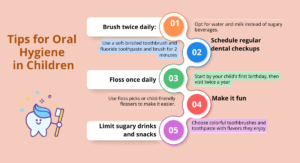
One of the most important dental tips is to brush your teeth properly twice a day.
Brushing helps remove plaque, food particles and bacteria from the surfaces of your teeth. If plaque is allowed to remain on the teeth for a long time, it can contribute to tooth decay and gum problems.
Use a soft-bristled toothbrush and fluoride toothpaste. Brush gently and make sure you clean:
- The front surfaces of your teeth
- The back surfaces
- Chewing surfaces
- Along the gumline
Spend approximately two minutes brushing and avoid using excessive pressure.
Brushing too hard does not clean your teeth better. Instead, it may irritate your gums or contribute to tooth wear.
Remember that your toothbrush also needs care. Replace it when the bristles become worn or approximately every three months.
2. Floss Regularly
Brushing alone cannot effectively clean every area between your teeth.
Food particles and plaque can accumulate in these spaces, making flossing an important part of your daily oral hygiene routine.
Use dental floss or another dentist-recommended interdental cleaning method to gently clean between your teeth.
Regular flossing can help:
- Remove plaque between teeth
- Reduce the risk of cavities between teeth
- Support healthy gums
- Improve overall oral hygiene
If your gums bleed when you start flossing, don’t automatically assume that flossing is harmful. Bleeding can be a sign of inflammation. If bleeding continues, consult your dentist for an evaluation.
3. Avoid Tobacco
Avoiding tobacco is one of the most important things you can do for your oral and overall health.
Smoking and other tobacco products can negatively affect the mouth and increase the risk of serious oral health problems.
Tobacco use can contribute to:
- Gum disease
- Tooth staining
- Persistent bad breath
- Delayed healing after dental procedures
- Tooth loss
- Oral cancer
If you use tobacco, consider speaking with a qualified healthcare professional about quitting.
Protecting your mouth from tobacco is not just about maintaining a beautiful smile—it is an important part of protecting your long-term health.
4. Eat a Balanced, Tooth-Friendly Diet
Your diet plays an important role in maintaining healthy teeth and gums.
Teeth need nutrients to remain strong, while frequent consumption of sugary foods and drinks can increase the risk of tooth decay.
Include a balanced diet containing foods such as:
- Fresh fruits and vegetables
- Dairy products where appropriate
- Protein-rich foods
- Whole grains
- Calcium-rich foods
Calcium and other essential nutrients support healthy bones and teeth.
Try to choose nutritious foods and avoid making sugary snacks and drinks a frequent part of your daily routine.
5. Visit Your Dentist Regularly
Regular dental check-ups are essential even when your teeth appear healthy.
Many dental problems may not cause noticeable symptoms during their early stages. A professional examination can help identify potential problems before they become more complicated.
During a dental check-up, your dentist may assess:
- Teeth for cavities
- Gum health
- Plaque and tartar buildup
- Tooth wear
- Existing dental restorations
- Bite and other oral concerns
Your dentist can also recommend a suitable cleaning and preventive care schedule based on your individual needs.
Don’t wait until you have severe tooth pain to visit the dentist.
Preventive dental care can help you maintain your smile and potentially reduce the need for extensive treatment.
6. Use Mouthwash When Recommended
Mouthwash can be a useful addition to an oral hygiene routine for some people.
However, mouthwash should not be considered a replacement for brushing and flossing.
Depending on your needs, your dentist may recommend a particular type of mouthwash to support:
- Plaque control
- Gum health
- Fluoride protection
- Bad breath management
If you are unsure which mouthwash is appropriate for you, ask your dentist.
It is also important to follow the product instructions and avoid swallowing mouthwash.
7. Clean Your Tongue Daily
Your tongue can collect bacteria, food particles and debris.
Cleaning your tongue daily can help improve overall mouth cleanliness and may help reduce bad breath.
You can gently clean your tongue using a toothbrush or a tongue cleaner.
Avoid scraping too aggressively. Gentle cleaning is enough.
Adding tongue cleaning to your regular brushing routine takes only a few seconds but can be a useful part of maintaining good oral hygiene.
8. Choose a Healthy Diet and Limit Sugary Foods
One of the most practical dental care tips is to pay attention not only to what you eat but also to how frequently your teeth are exposed to sugar.
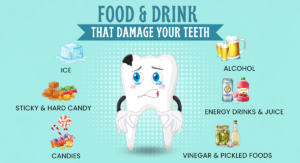
Sugary foods and drinks can contribute to tooth decay, particularly when consumed frequently throughout the day.
Try to limit:
- Candies
- Chocolates
- Cakes
- Cookies
- Sugary soft drinks
- Sweetened beverages
- Sticky sweets
Instead, choose healthier snacks and drink plenty of water.
You don’t necessarily have to eliminate every treat from your diet. The goal is to maintain a balanced diet and avoid frequent sugary exposures.
9. Drink More Water
Water is one of the simplest choices for supporting good oral health.
Drinking water can help wash away some food particles and keep your mouth hydrated.
Make water your preferred everyday drink, particularly between meals.
Replacing frequent sugary beverages with water can also help reduce your exposure to added sugars.
If your local drinking water contains fluoride, it may also contribute to fluoride exposure, which can help strengthen tooth enamel.
For personalized advice about fluoride and your oral health, speak with your dentist.
10. Don’t Ignore Dental Problems
Perhaps one of the most important dental tips is simple:
Don’t ignore changes in your teeth or gums.
A small dental problem can sometimes become more complicated if treatment is delayed.
Contact your dentist if you experience:
- Persistent toothache
- Tooth sensitivity
- Swollen gums
- Bleeding gums
- A loose tooth
- A broken or chipped tooth
- Persistent bad breath
- Facial or gum swelling
- Pain while chewing
- Unusual spots or changes in your mouth
Early evaluation allows your dentist to determine the cause and recommend appropriate treatment.
If you experience significant swelling, difficulty breathing or swallowing, or a serious dental injury, seek urgent professional medical or dental care.
Why Preventive Dental Care Matters
Many common dental problems can be reduced through good preventive habits.
A good daily routine includes:
Morning:
Brush → Clean between teeth → Healthy breakfast
During the day:
Drink water → Choose nutritious foods → Limit sugary snacks
Night:
Brush → Clean between teeth → Avoid unnecessary snacking after brushing
Along with these daily habits, regular dental examinations help your dentist monitor your oral health.
Remember that everyone’s dental needs are different. People with braces, dental implants, gum disease, diabetes, dry mouth or other specific conditions may require additional care.
Simple Dental Tips for the Whole Family
Good oral hygiene is easier when the whole family follows healthy habits together.
Parents can encourage children to brush their teeth by making brushing part of the family routine. Adults can also set a good example by brushing regularly, eating a balanced diet and attending dental appointments.
Some simple family habits include:
- Brush twice a day
- Clean between teeth regularly
- Drink more water
- Reduce sugary drinks
- Avoid tobacco
- Eat a balanced diet
- Visit the dentist regularly
- Never ignore persistent dental symptoms
Small habits repeated every day can have a big impact over time.
Conclusion
Maintaining a healthy smile requires more than occasional brushing. It depends on consistent daily habits and regular professional dental care.
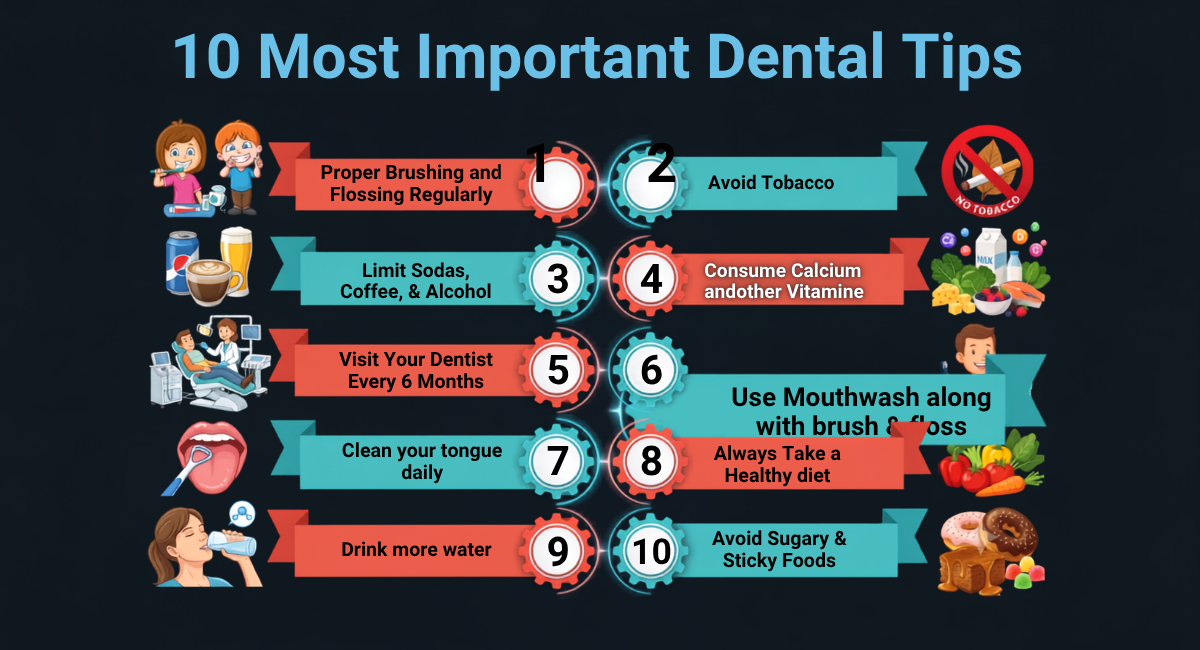
The 10 most important dental tips include brushing properly, flossing regularly, avoiding tobacco, eating a balanced diet, visiting your dentist, using mouthwash when appropriate, cleaning your tongue, limiting sugary foods, drinking more water and seeking professional advice when dental problems appear.
Your teeth and gums deserve regular attention throughout every stage of life.
Prevention is always better than waiting for a dental problem to become painful or complicated.
If you are looking for professional dental care in Bhubaneswar, Dr. Pathak’s Dental Clinic can help you maintain your oral health with appropriate preventive and treatment options.
Protect Your Smile. Visit Your Dentist Regularly.
Dr. Pathak’s Dental Clinic
📞 +91 90903 42584
📍 Fire Station Chhak, Baramunda, Bhubaneswar – 751003