
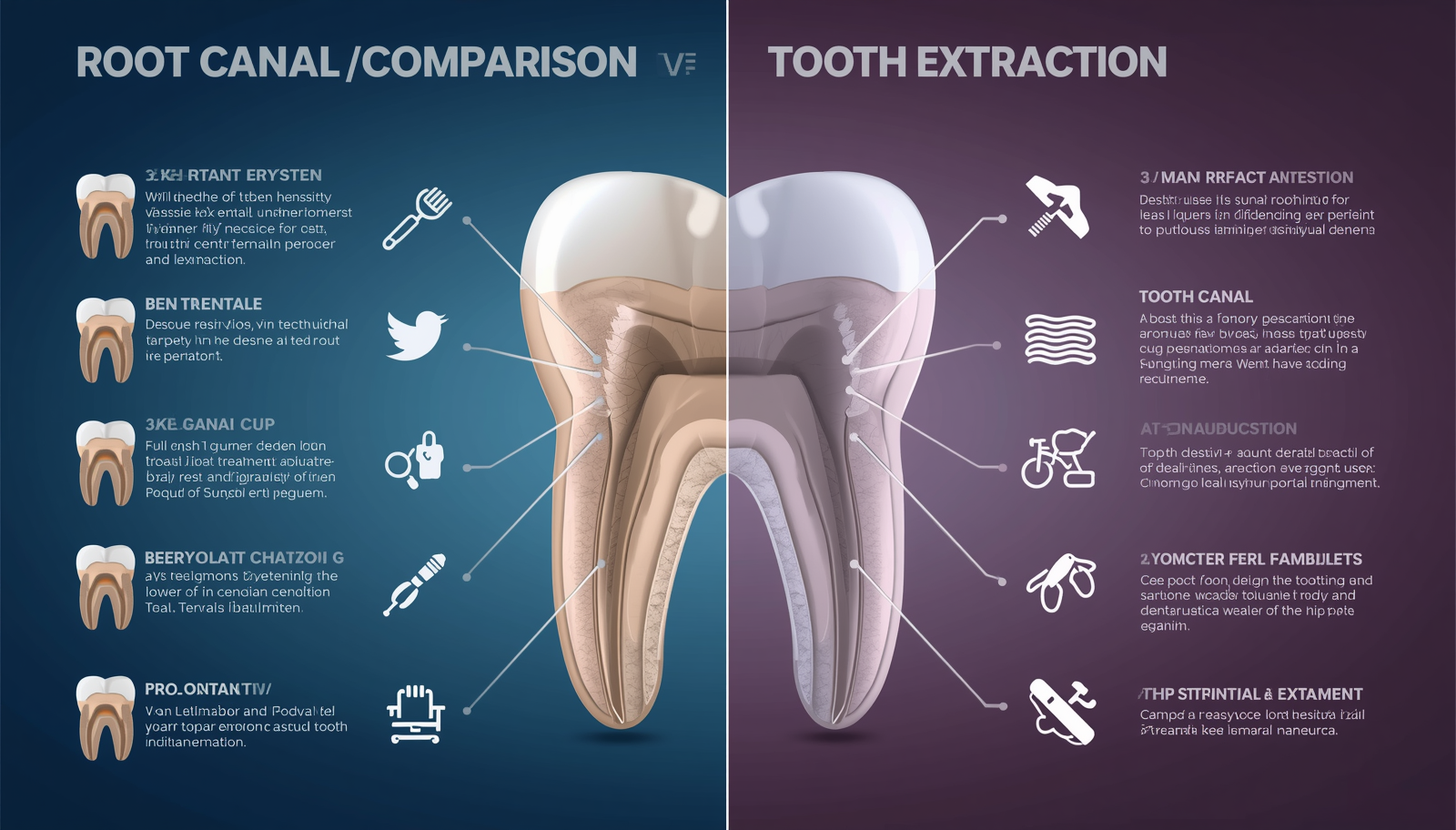
When a tooth becomes severely infected or damaged, patients often wonder whether they should choose root canal treatment or tooth extraction. Both procedures solve dental problems, but they have very different long-term effects on oral health.
Dentists usually recommend saving the natural tooth whenever possible. Root canal treatment allows patients to preserve their original tooth structure while eliminating infection.
In this detailed comparison, we will discuss the differences between root canal treatment and tooth extraction.
What is Root Canal Treatment?
Root canal treatment removes infected pulp from inside the tooth while preserving the natural structure.
The tooth is cleaned, disinfected, sealed, and restored with a crown.
What is Tooth Extraction?
Tooth extraction involves removing the entire tooth from the socket.
After extraction, the missing tooth may require replacement using implants, bridges, or dentures.
Root Canal vs Tooth Extraction: Major Differences
Tooth Preservation
Root canal saves the natural tooth. Extraction removes it permanently.
Appearance
Root canal maintains natural appearance. Missing teeth may affect smile aesthetics.
Recovery
Root canal recovery is generally easier. Extraction may require longer healing.
Cost
Extraction may seem cheaper initially. However, tooth replacement increases long-term costs.
Bone Preservation
Root canal preserves jawbone. Missing teeth can cause bone loss.
Benefits of Root Canal Treatment
Maintains Natural Tooth
Natural teeth function better than artificial replacements.
Better Chewing Efficiency
Patients can eat comfortably.
Prevents Teeth Shifting
Neighboring teeth remain stable.
Long-Term Solution
Properly treated teeth can last decades.
Improved Appearance
Natural smile remains intact.
When Tooth Extraction May Be Necessary
Extraction may be recommended when:
- Tooth is severely broken
- Infection is untreatable
- Advanced bone loss exists
- Wisdom tooth complications occur
- Severe trauma damages tooth completely
Dental Implant After Extraction
Many patients require dental implants after extraction.
Implants restore appearance and chewing function but involve additional procedures and expenses.
Which Option is Less Painful?
Modern dentistry makes both procedures comfortable.
However, root canal treatment usually involves less recovery discomfort than extraction.
Long-Term Oral Health Impact
Saving the natural tooth supports better oral health.
Extraction may lead to:
- Bone shrinkage
- Teeth movement
- Bite problems
- Difficulty chewing
Recovery Comparison
Root Canal Recovery
- Mild soreness
- Faster healing
- Minimal downtime
Extraction Recovery
- Bleeding
- Swelling
- Dietary restrictions
- Longer healing time
Cost Comparison
Although extraction appears less expensive initially, replacement treatments increase total cost.
Root canal with crown is often more cost-effective long-term.
How Dentists Decide the Best Option
Dentists evaluate:
- Tooth condition
- Bone support
- Infection severity
- Patient health
- Long-term prognosis
Preventing Severe Tooth Damage
Maintain Oral Hygiene
Brush and floss regularly.
Visit Dentist Early
Treat cavities before infection spreads.
Avoid Hard Foods
Protect teeth from fractures.
Wear Mouth Protection
Use mouth guards during sports.
Conclusion
In most cases, root canal treatment is the better option because it preserves the natural tooth and maintains oral health. Tooth extraction should generally be the last resort.
Consult an experienced dental specialist to determine the best treatment option for your condition.