Good oral health starts in childhood. Developing healthy dental habits early can help children maintain strong teeth and healthy gums as they grow. Oral hygiene in children is not only about brushing teeth—it also includes flossing, making healthy food and drink choices, regular dental check-ups and creating positive habits.
Children may not always understand why taking care of their teeth is important. Parents play a key role in teaching and supervising these habits, particularly during the early years.
The good news is that children’s dental care can be simple and enjoyable when it becomes part of their daily routine.
Here are some practical tips for oral hygiene in children that parents can follow.
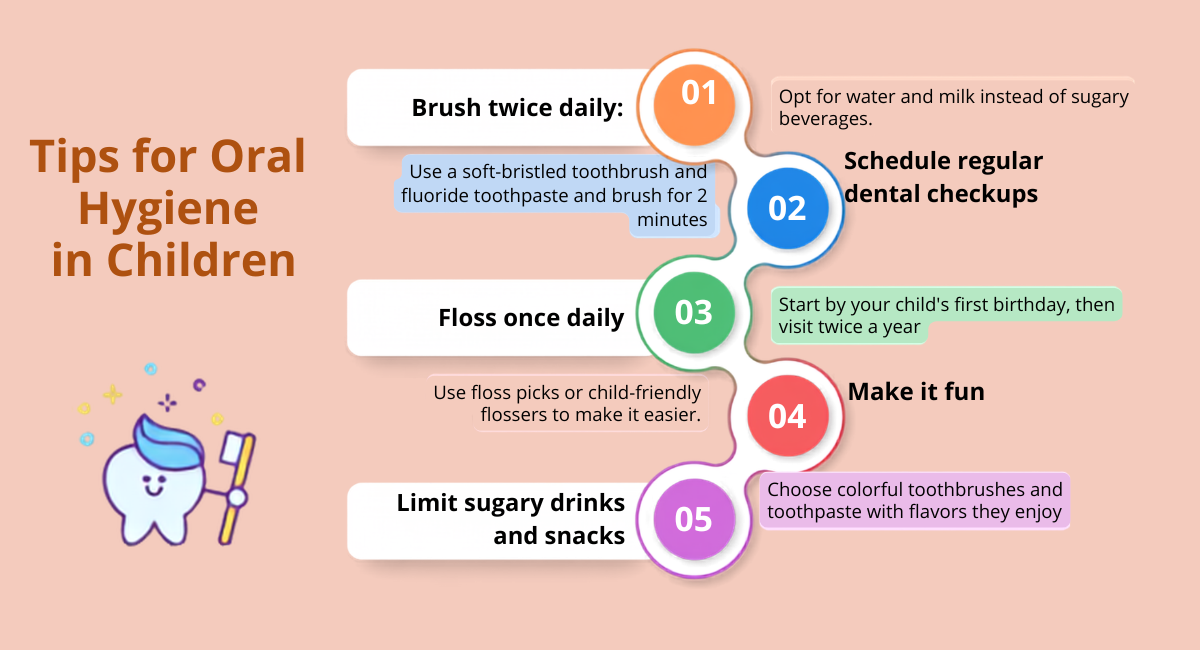
1. Brush Twice Daily
One of the most important rules for oral hygiene in children is brushing twice every day.
Children should generally brush once in the morning and once before bedtime. Night-time brushing is especially important because plaque and food particles can remain on the teeth while a child sleeps.
Use a soft-bristled, child-sized toothbrush and an age-appropriate fluoride toothpaste.
Parents should supervise young children while they brush and help them reach areas they may miss.
Encourage your child to brush for approximately two minutes.
A simple routine can be:
Morning: Wake up → Brush → Breakfast
Night: Dinner → Brush → Bedtime
Making brushing part of the same routine every day helps children develop a lifelong habit.
2. Use Fluoride Toothpaste Correctly
Fluoride is an important part of cavity prevention because it helps strengthen tooth enamel.
For young children, parents should use an age-appropriate amount of fluoride toothpaste and supervise brushing.
Children should be encouraged to spit out toothpaste after brushing rather than swallowing it.
The amount of toothpaste should be appropriate for the child’s age. If you are unsure which toothpaste or amount is suitable, ask your dentist for personalized advice.
Avoid allowing children to eat toothpaste directly from the tube.
3. Floss Once Daily
Brushing cannot effectively clean all the spaces between teeth.
Once children’s teeth begin touching each other, cleaning between them becomes an important part of their oral hygiene routine.
Parents can use:
- Dental floss
- Floss picks
- Child-friendly interdental cleaning products
For younger children, parents will usually need to perform or supervise flossing because children may not yet have the coordination required to clean between their teeth effectively.
Be gentle and avoid snapping the floss against the gums.
Regular interdental cleaning helps remove plaque and food particles that a toothbrush may not reach.
4. Limit Sugary Drinks and Snacks
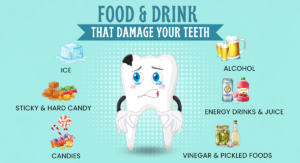
Frequent exposure to sugar can increase the risk of tooth decay.
Children often enjoy sweets, chocolates, biscuits, cakes and sugary drinks, but these should not become frequent everyday snacks.
Try to limit:
- Soft drinks
- Sweetened juices
- Flavoured sugary drinks
- Candies
- Chocolates
- Sticky sweets
- Cakes and biscuits
Instead, encourage healthier snacks such as fruits, vegetables and other nutritious foods appropriate for the child’s age.
It is also helpful to avoid allowing children to continuously snack on sugary foods throughout the day.
5. Choose Water and Milk Instead of Sugary Beverages
The infographic highlights an important habit: choose water and milk instead of sugary beverages.
Water is an excellent everyday drink for children. It helps keep the mouth hydrated and does not expose teeth to added sugar.
Parents should avoid making sugary beverages a regular part of a child’s daily routine.
When appropriate, plain milk can also be part of a balanced diet.
Remember that some drinks marketed as “healthy” can still contain significant amounts of sugar. Check labels when choosing packaged beverages for children.
Schedule Regular Dental Check-Ups
Children should start seeing a dentist early in life. Professional dental organizations generally recommend that a child’s first dental visit occur by the first birthday, followed by regular visits based on the child’s individual oral health needs.
Regular dental check-ups allow the dentist to monitor:
- Tooth development
- Cavities
- Gum health
- Oral hygiene
- Tooth eruption
- Bite development
- Habits that may affect oral health
Regular visits also help children become familiar with the dental environment.
Parents should not wait until their child develops severe tooth pain before arranging a dental appointment.
A dentist can also provide age-specific guidance about brushing, fluoride, diet and other preventive measures.
Make Oral Hygiene Fun
Children are more likely to follow a routine when they enjoy it.
Instead of presenting brushing as a boring task, parents can make oral hygiene in children fun and interactive.
Try these ideas:
Let Them Choose Their Toothbrush
Allow your child to select a toothbrush featuring a favourite colour or character.
Brush Together
Brush your teeth at the same time as your child. Children often learn by copying their parents.
Use a Two-Minute Timer
A timer or short brushing song can help children understand how long they should brush.
Create a Reward Chart
A simple sticker chart can encourage children to remember their morning and bedtime brushing.
Praise Their Effort
Positive encouragement can make dental care feel rewarding rather than stressful.
The goal is to help children associate oral hygiene with something positive.
Help Your Child Brush Properly
Young children often want to brush their own teeth, which is a good way to encourage independence. However, they may not yet have the coordination to clean every tooth thoroughly.
A useful approach is:
“You brush first, then I brush.”
Allow your child to brush independently first, and then follow up by helping clean the areas they missed.
Pay particular attention to:
- Back teeth
- Chewing surfaces
- Gumlines
- Areas between teeth
As children develop better brushing skills, parents can gradually give them more responsibility.
Don’t Ignore Baby Teeth
Some parents believe baby teeth are not very important because they eventually fall out.
This is a misconception.
Healthy baby teeth help children:
- Chew food
- Develop clear speech
- Maintain space for permanent teeth
- Develop healthy oral habits
Untreated cavities in baby teeth can cause pain and infection and may interfere with eating, sleeping and normal daily activities.
Taking care of baby teeth is therefore an important part of children’s dental care.
Watch for Signs of Dental Problems
Parents should regularly look at their child’s teeth and gums.
Contact a dentist if you notice:
- Toothache
- Sensitivity
- Swollen gums
- Bleeding gums
- White, brown or black spots on teeth
- Persistent bad breath
- Difficulty chewing
- A chipped or broken tooth
- Facial or gum swelling
- Unusual changes in the mouth
Early dental evaluation can help identify problems before they become more serious.
If a child develops significant swelling, severe pain, difficulty swallowing or breathing, or experiences a serious dental injury, seek urgent professional care.
Encourage Healthy Eating Habits
A balanced diet supports both general health and healthy teeth.
Encourage children to eat a variety of nutritious foods, including appropriate portions of:
- Vegetables
- Fruits
- Whole grains
- Protein-rich foods
- Calcium-rich foods
Try to make water the main drink between meals and limit frequent sugary snacks.
Good nutrition combined with regular brushing and professional dental care provides a strong foundation for healthy teeth.
Why Good Oral Hygiene Matters in Childhood
The habits children learn during their early years can influence their oral health as they grow.
Good oral hygiene in children can help reduce the risk of common dental problems and teach children how to take responsibility for their health.
Parents can support this process by creating a simple routine:
Morning:
Brush teeth → Healthy breakfast
During the day:
Drink water → Healthy snacks → Avoid frequent sugary drinks
Evening:
Clean between teeth → Brush before bed
Regularly:
Visit the dentist → Monitor dental development
Consistency is more important than perfection.
Conclusion
Healthy teeth begin with healthy habits.
The most important tips for oral hygiene in children include brushing twice daily, using fluoride toothpaste appropriately, cleaning between teeth, limiting sugary foods and drinks, choosing water, attending regular dental check-ups and making dental care enjoyable.
Parents have an important role in helping children develop these habits. With patient guidance and regular professional care, children can learn to look after their teeth and develop a positive attitude toward dental visits.
Remember, prevention starts early. Don’t wait for tooth pain before paying attention to your child’s oral health.
Give Your Child a Healthy Smile
At Dr. Pathak’s Dental Clinic, we believe that early dental care can help children develop healthy habits and maintain good oral health as they grow.
If you have concerns about your child’s teeth, brushing, tooth eruption or overall oral health, schedule a dental consultation for professional guidance.
Dr. Pathak’s Dental Clinic
📞 +91 90903 42584
📍 Fire Station Chhak, Baramunda, Bhubaneswar – 751003