
Tooth Tips for Children: Start With a Consistent Brushing Routine
Tooth tips for children are important for building healthy oral hygiene habits from an early age. Children between 2 and 7 years are learning how to care for their teeth, but they still need guidance and supervision when brushing and maintaining good oral health. Baby teeth are important because they help children chew food, speak clearly and maintain space for permanent teeth.
Baby teeth are important even though they eventually fall out. They help children chew food, speak clearly and maintain space for permanent teeth. Tooth decay in baby teeth can cause pain, difficulty eating and other dental problems.
The good news is that many childhood dental problems can be prevented with simple daily habits.
Here are some practical tooth tips for children aged 2–7 years that every parent should know.
1. Start With a Consistent Brushing Routine
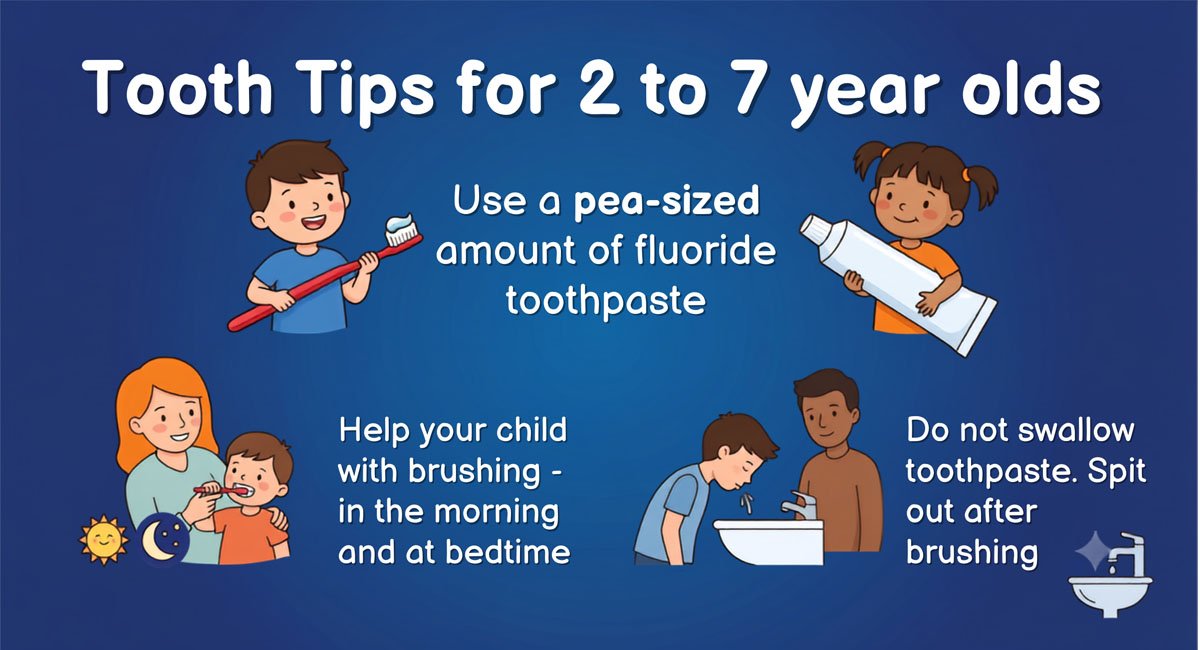
Children should brush their teeth twice a day—once in the morning and once before bedtime.
For young children, brushing should not be treated as something optional. Parents should create a regular routine so that brushing becomes a normal part of the child’s day.
A simple routine can be:
Morning: Wake up → Brush → Breakfast
Night: Dinner → Brush → Bedtime
Night-time brushing is particularly important because food particles and plaque can remain on the teeth while the child sleeps.
2. Use the Right Toothbrush
Choose a small, soft-bristled toothbrush designed specifically for children.
A large toothbrush may be uncomfortable and difficult for a young child to move around their mouth. A child-sized toothbrush makes it easier to reach different areas of the teeth.
Replace the toothbrush when the bristles become worn or approximately every three months, or sooner if the bristles become damaged.
Allowing children to choose a toothbrush with their favourite colour or character can also make brushing more enjoyable.
3. Use Fluoride Toothpaste Correctly
Fluoride helps strengthen tooth enamel and protect teeth against decay. However, children need an age-appropriate amount of toothpaste.
For children under 3 years, parents can use a very small smear or rice-grain amount of fluoride toothpaste.
For children 3–6 years, a pea-sized amount is generally recommended.
Parents should supervise brushing and encourage children to spit out the toothpaste rather than swallowing it.
If you are unsure about the appropriate fluoride toothpaste or amount for your child, consult a dentist.
4. Parents Should Help With Brushing
Many children want to brush their own teeth, which is great for developing independence. However, young children often don’t have the manual skills to clean every surface properly.
A useful approach is:
“You brush first, then I brush.”
Let your child try brushing first and then help them clean areas they may have missed.
Parents should pay particular attention to the back teeth, gumline and other difficult-to-reach areas.
As children grow and develop better brushing skills, they can gradually become more independent.
5. Teach Children How to Brush Properly
Simply moving a toothbrush around the mouth isn’t enough.
Teach your child to gently brush:
- The outside surfaces of the teeth
- The inside surfaces
- The chewing surfaces
- Along the gumline
- The tongue
Use gentle, small circular or back-and-forth movements depending on the surface.
Avoid aggressive brushing because excessive pressure can irritate the gums and damage tooth surfaces.
Make brushing fun by using a two-minute song, brushing timer or simple reward chart.
6. Limit Sugary Foods and Drinks
One of the most important ways to protect children’s teeth is to reduce how often their teeth are exposed to sugar.
Frequent sugary snacks and drinks can increase the risk of tooth decay.
Try to limit:
- Chocolates
- Candies
- Cakes
- Cookies
- Sweetened drinks
- Sugary cereals
- Sticky sweets
Instead, offer healthier choices such as:
- Fresh fruits
- Vegetables
- Plain yoghurt
- Cheese
- Nuts where age-appropriate and safe
- Water
The frequency of sugary exposures matters, so try to keep sugary foods to mealtimes rather than allowing frequent snacking throughout the day.
7. Make Water the Preferred Drink
Water is one of the simplest choices for maintaining good oral health.
Encourage children to drink water regularly, especially between meals.
Avoid making sweetened beverages part of the child’s everyday routine.
Juices and other sweet drinks can expose teeth to sugars and acids. Even drinks that seem healthy can contribute to dental problems when consumed frequently.
For everyday hydration, plain water is an excellent choice.
8. Don’t Let Children Sleep With a Bottle of Milk or Sweet Drinks
Parents should avoid putting young children to bed with bottles containing sugary drinks.
If a child regularly falls asleep while drinking from a bottle, their teeth may remain exposed to the liquid for an extended period.
As children grow, encourage drinking from a cup and gradually move away from prolonged bottle use.
If you have concerns about your child’s feeding or drinking habits and their effect on oral health, discuss them with a pediatric dentist.
9. Don’t Ignore Baby Teeth
A common misconception is that baby teeth don’t require much attention because they eventually fall out.
This is incorrect.
Healthy baby teeth help children:
- Eat comfortably
- Develop clear speech
- Maintain space for permanent teeth
- Develop healthy oral habits
Untreated decay in baby teeth can cause pain and infection and may affect a child’s eating, sleeping and overall well-being.
Therefore, baby teeth deserve the same care and attention as permanent teeth.
10. Schedule Regular Dental Check-Ups
Regular dental visits allow the dentist to monitor your child’s teeth and identify potential problems early.
A dental visit can include checking:
- Tooth development
- Cavities
- Gum health
- Oral hygiene
- Bite and jaw development
- Habits that may affect the teeth
Dental visits also help children become comfortable with the dental environment.
Instead of waiting until your child has tooth pain, make dental check-ups part of their normal healthcare routine.
11. Watch for Signs of Dental Problems
Parents should pay attention to changes in their child’s mouth.
Contact a dentist if you notice:
- Toothache
- Sensitivity
- Swollen gums
- Bleeding gums
- White, brown or black spots on teeth
- Bad breath that persists
- Difficulty chewing
- Facial swelling
- A chipped or broken tooth
- Early or unexpected tooth loss
Early evaluation can often prevent a small problem from becoming more complicated.
12. Protect Teeth During Sports and Play
Children between 2 and 7 years are active and may participate in sports and physical activities.
Accidents can sometimes result in chipped, cracked or knocked-out teeth.
For children participating in activities where there is a risk of facial injury, ask your dentist whether a properly fitted mouthguard is appropriate.
Parents should also know what to do in case of a dental injury and seek professional dental advice promptly.
13. Make Dental Care Fun
Children respond better when oral hygiene feels positive rather than like a punishment.
Parents can:
- Brush together as a family
- Let children choose their toothbrush
- Use a brushing song
- Create a sticker chart
- Read children’s books about visiting the dentist
- Praise good brushing habits
Try to avoid using the dentist as a threat or telling children that dental treatment is something to fear.
A positive attitude can help children develop confidence about dental visits.
14. Lead by Example
Children learn by watching their parents.
If they see you brushing twice a day, choosing healthy foods and visiting the dentist regularly, they are more likely to develop similar habits.
Make oral hygiene a family routine rather than something that only children have to do.
When Should Parents Take Their Child to the Dentist?
If your child has never visited a dentist, it is a good idea to schedule an appointment rather than waiting for a problem.
Regular dental care allows a dentist to monitor oral development and provide personalized advice based on your child’s age, dental health and habits.
For children aged 2–7 years, preventive dental care can make a significant difference in maintaining healthy teeth and building good lifelong habits.
Conclusion
Healthy teeth begin with healthy habits.
For children aged 2–7 years, parents play an important role in developing good oral hygiene routines. Brushing twice daily with fluoride toothpaste, choosing tooth-friendly foods, limiting sugary snacks and drinks, drinking water, supervising brushing and maintaining regular dental check-ups can all help protect your child’s smile.
Remember, prevention is better than treatment. Small daily habits today can help your child enjoy a healthier smile as they grow.
If you have concerns about your child’s teeth, gums, brushing habits or dental development, consult a qualified dental professional for personalized guidance.
Give Your Child a Healthy Smile
At Pathak Dental Clinic, we believe that early dental care helps children develop healthy habits and positive attitudes toward dentistry.
Book a dental consultation for your child and take the first step toward a healthy, confident smile.